
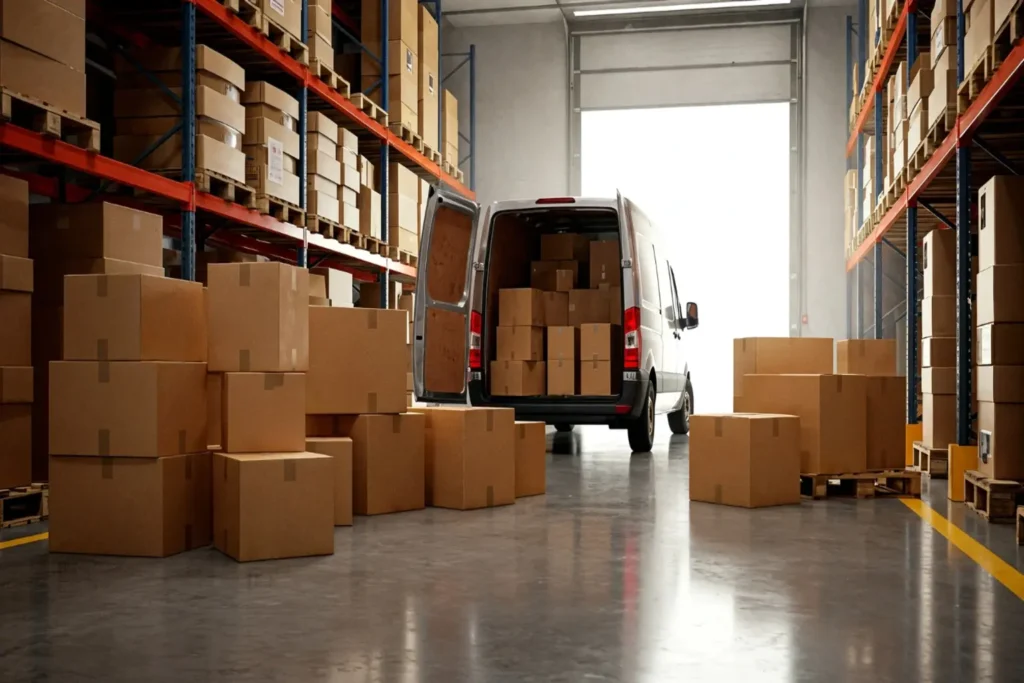
How E-commerce Logistics Services Supports Growth
The growth of e-commerce within the UK is directly tied to the efficiency of the logistics operations that support it. Companies that grow successfully depend on organized logistics solutions for e-commerce to handle the speed of delivery, accuracy of inventory and expectations of customers. With the growth of online sales across all sectors, including fashion, retail and consumer goods, businesses must improve the supply chain for e-commerce to stay competitive. Delays, stock shortages or poor fulfillment directly affect customer retention as well as revenue.
This is the reason modern shipping solutions for online commerce are designed to be quick as well as flexible. They are also driven by technology, which allows businesses to handle larger orders while maintaining uniform standards of service across the UK market.
The Role of Logistics in E-commerce Expansion
The growth of e-commerce is dependent on more than just marketing and demand for products. Logistics is the backbone of operations that makes sure all orders are properly processed, packed and delivered in a timely manner.
The well-structured e-commerce logistics services allow businesses to:
- Control high order volume without delay.
- Maintain an accurate inventory across several locations.
- Deliver orders on time.
- Reduce operational errors.
An optimized supply chain for e-commerce ensures that goods move smoothly from storage to customers, ensuring steady growth without bottlenecks in operations.
Speed and Reliability Drive Customer Retention
UK customers are increasingly demanding speedy delivery. Same day and next day delivery is becoming the norm. Companies that do not comply with this expectation are at risk of losing customers.
Effective shipping solutions for e-commerce allow:
- Delivery times and dispatch times are faster.
- Real-time tracking for customers.
- Delivery failures are reduced.
- A better overall experience for customers.
The reliability of delivery directly affects repeat purchases, making logistics an essential factor in the long-term growth of revenue.
Scalability Without Operational Complexity
As businesses expand online and expand, the process of managing logistics within them becomes more complicated and resource-intensive. This is why third-party suppliers can play an important role.
Professional e-commerce logistics services provide scalability through:
- Inventory management and warehouse storage
- Order fulfilment systems
- Fleet and workforce availability
- Nationwide delivery coverage
An adaptable supply chain for e-commerce allows businesses to expand their operations into new markets, accommodate high demand times, and increase capacity for orders without requiring major infrastructure investment.
Technology Improves Efficiency and Cost Control
Integration of technology is a key element in modern logistics. A lot of UK companies are now using technology that is automated and AI-driven to improve their operations.
Innovative solutions for shipping to e-commerce can help businesses:
- Monitor inventory in real-time
- Reduce manual errors
- Optimise delivery routes
- Lower operating costs
These efficiency gains allow companies to invest savings in growth strategies like expansion of their product, marketing and even customer acquisition.
Managing Returns Efficiently
Returns comprise a significant portion of online commerce, particularly in areas such as electronics and fashion. Insufficient handling of returns can adversely affect customer satisfaction.
A reliable supply chain for e-commerce includes well-organized reverse logistics that allow companies to:
- Process returns quickly
- Restock items quickly
- Minimise losses
- Remain confident in your customer
Returns are handled efficiently to ensure that growth isn’t hampered by operational inefficiencies.
Supporting Market Expansion
Online retailers operating in the UK are increasing their focus on international markets. Logistics companies can facilitate this growth by coordinating cross-border shipping and complying with demands.
The reliability of e-commerce logistics services makes it simpler to:
- Customers can be reached beyond the UK
- Manage international delivery timelines
- Control customs and other documentation
- Maintain uniform service standards
The global reach opens up new revenue streams without increasing the operational complexity.
Conclusion
The sustainability of e-commerce growth is dependent on the quality and flexibility that logistics services provide. Companies who invest in an organised ecommerce logistics service are better equipped to meet customer expectations effectively, control returns, and grow without disruption. A well-organized supply chain for e-commerce ensures the same flow of products, and the latest shipping options for e-commerce speed up delivery and reduce costs. Together, these factors make a solid basis to sustain growth in a highly competitive UK market.
Z5 Logistics supports e-commerce businesses by providing customised logistics solutions that are designed for speed, precision, and scaling. From order fulfillment to delivery on time, our team will ensure that every step of your logistics process operates efficiently.
If you’re planning to grow your e-commerce company, get in touch with Z5 Logistics to build a delivery system that grows without compromising.
FAQs
1.What is the largest logistical problem facing businesses operating online within the UK?
The control of delivery speeds while also reducing costs is among the most frequent challenges, especially in peak demand periods.
2. What are the logistics companies’ strategies for handling seasonal fluctuations in order volumes?
They can increase the capacity of warehouses and optimize the allocation of workforce and make use of flexible transportation networks to handle larger volumes.
3. Why is it important to manage returns in the logistics of e-commerce?
Effective returns processing increases customer satisfaction and also helps businesses make money from the returned goods.
4. Do small-scale e-commerce firms get the benefit of outsourced logistics?
Yes, outsourcing allows small businesses to gain access to infrastructure and systems without huge upfront costs.
5. How do logistics affect the experience of customers?
Fast delivery, precise order fulfilment, and quick returns directly impact the satisfaction of customers and their repeat purchases.
