
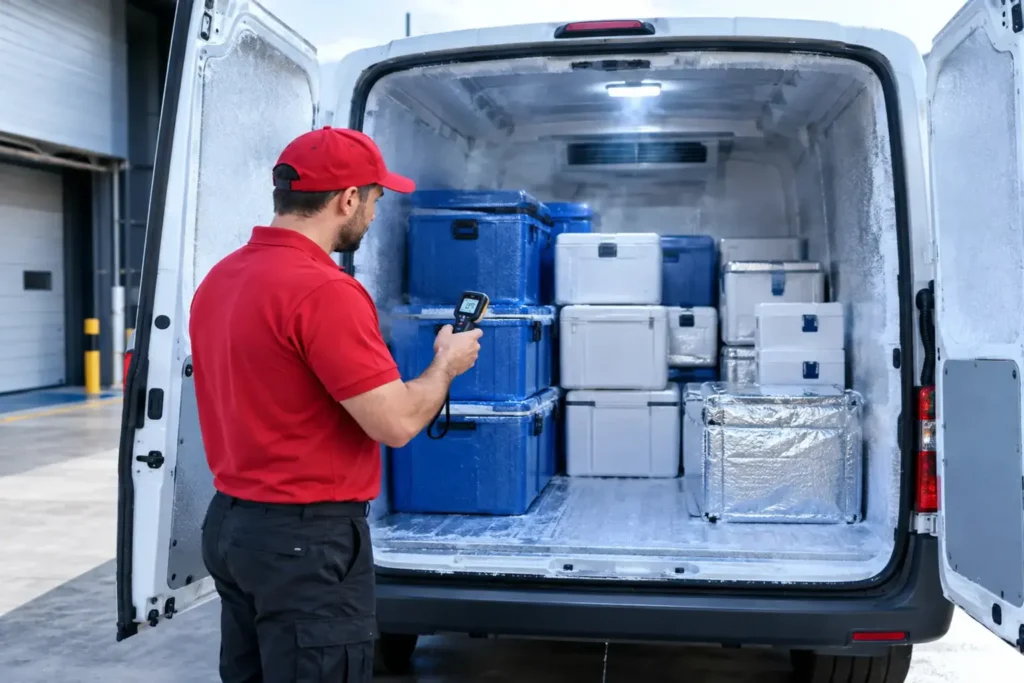
Refrigerated Transport UK: Why Temperature-Controlled Delivery Matters for Sensitive Goods
Some goods cannot simply be loaded into a standard delivery vehicle and transported from A to B. Food, medicines, clinical samples and temperature-sensitive materials can deteriorate if they are exposed to unsuitable conditions, even for a relatively short period.
Refrigerated Transport UK provides a controlled environment throughout the journey, helping businesses maintain the required temperature from collection through to delivery. For goods that depend on specific storage conditions, the transport stage is part of the cold chain rather than an isolated delivery step.
What Is Temperature-Controlled Transport?
Temperature-controlled transport involves using vehicles, containers or specialist packaging designed to maintain a specified temperature range during transit.
The required conditions depend on the product. Chilled food, frozen goods, medicines and industrial materials may all have different temperature requirements.
A reliable temperature controlled logistics process considers more than simply turning on refrigeration. The condition of the goods before collection, vehicle temperature, journey duration, loading process and delivery point can all affect the outcome.
Why Temperature Control Matters
Temperature changes can affect sensitive goods in several ways. Food may spoil more quickly, medicines can lose their intended properties, and certain chemicals may become unstable.
Maintaining the correct environment helps to:
- Protect product quality and condition
- Reduce spoilage and product loss
- Maintain required storage conditions
- Support traceability and regulatory requirements
- Reduce rejected or unusable shipments
- Protect shelf life and commercial value
For businesses dealing with sensitive products, maintaining the cold chain is therefore a quality and risk-control issue, not simply a transport preference.
Chilled And Frozen Goods Need Consistent Conditions
Chilled Goods Delivery covers products that need to remain within a controlled low-temperature range during transportation. This can include dairy products, meat, seafood, fresh produce and prepared foods.
Frozen products have different requirements and generally need to remain at significantly lower temperatures. Under UK food safety guidance, chilled food is generally kept at 8°C or below, while frozen food should normally be maintained at -18°C or colder, subject to applicable requirements and product specifications.
A refrigerated vehicle needs to maintain appropriate conditions throughout the journey rather than simply reaching the required temperature at the start.
Cold Chain Management Goes Beyond The Vehicle
Effective Cold Chain Management begins before the vehicle moves.
Goods should be stored correctly before collection and prepared for the journey without unnecessary exposure to unsuitable temperatures. Loading should be organised carefully so that airflow is not obstructed and the refrigeration system can maintain the required environment.
Delivery planning matters too. Long waiting periods, poorly coordinated handovers or delays at the destination can put sensitive goods at risk.
This is why temperature-controlled transport works best as part of a planned process covering storage, collection, transit and final delivery.
Temperature Monitoring Provides Greater Control
Temperature monitoring allows businesses to see whether goods have remained within the required range during transit.
Modern systems can record temperature data alongside vehicle location and journey information. This creates a useful record if a customer, quality team or regulator needs evidence of the conditions maintained during transportation.
For high-value or particularly sensitive goods, monitoring can also help identify problems earlier rather than discovering a temperature issue only after delivery.
Who Uses Refrigerated Transport?
Several UK industries depend on controlled-temperature logistics.
Food And Beverage
Food businesses use refrigerated transport for products such as dairy, meat, seafood, fresh produce and prepared meals. Maintaining suitable temperatures helps protect food quality and supports food safety throughout distribution.
Pharmaceuticals And Life Sciences
Medicines, vaccines, biologics and diagnostic materials can have tightly controlled storage requirements. Some products need chilled transport, while others require controlled room-temperature conditions.
Clinical Sample Handling also requires careful attention to the specific requirements of the material being transported. Incorrect temperatures can affect sample integrity and potentially compromise subsequent testing.
Chemical And Industrial Products
Certain chemicals and industrial materials can be sensitive to heat, freezing or rapid temperature changes. Temperature-controlled transport can help maintain the stability of products that may otherwise degrade or behave unpredictably.
What Can Happen When The Cold Chain Breaks?
A temperature excursion does not always produce an obvious visible change.
A food product may appear acceptable but have a shortened shelf life. A pharmaceutical product may require assessment before it can be used. A chemical product may become unsuitable for its intended application.
The consequences can include:
- Rejected deliveries
- Product disposal
- Reduced shelf life
- Customer complaints
- Financial losses
- Regulatory concerns
- Potential product recalls
For this reason, preventing temperature excursions is generally more effective than dealing with their consequences after delivery.
Choosing The Right Temperature-Controlled Service
Before arranging transport, businesses should establish the exact requirements of the goods.
Consider:
- Required temperature range
- Maximum permitted temperature variation
- Journey distance and expected duration
- Packaging requirements
- Loading and unloading conditions
- Monitoring and recording requirements
- Collection and delivery windows
- Any regulatory or handling requirements
Clear information at the booking stage helps ensure that the transport arrangement matches the product rather than relying on a generic refrigerated service.
Final Thoughts
Temperature-controlled delivery protects more than the physical condition of a shipment. For sensitive goods, it helps preserve product quality, reduce waste, maintain traceability and meet applicable handling requirements.
From Frozen Product Shipping and chilled food distribution to pharmaceuticals and Clinical Sample Handling, maintaining the correct conditions throughout transit is an essential part of the supply chain.
When the product depends on temperature, the delivery process needs to be planned around that requirement from collection to final handover.
Need to arrange specialist transport for temperature-sensitive goods across the UK? Contact Z5 Logistics to discuss your delivery requirements and suitable transport options.
FAQs
Q1:What Is Refrigerated Transport Used For?
A: Refrigerated transport is used for goods that need to remain within a controlled temperature range, including chilled food, frozen products, pharmaceuticals, clinical materials and certain industrial goods.
Q2:What Temperature Should Chilled Goods Be Transported At?
A: Many chilled foods are generally required to be kept at 8°C or below in the UK, although the correct temperature depends on the product and applicable requirements.
Q3: What Is The Difference Between Chilled And Frozen Transport?
A: Chilled transport maintains goods at a low but non-frozen temperature, while frozen transport keeps products at much lower temperatures to prevent them from thawing.
Q4:Why Is Temperature Monitoring Important?
A:Temperature monitoring provides evidence of the conditions maintained during transit and can help identify temperature excursions before they become larger problems.
Q5: Can Pharmaceuticals Be Transported In Refrigerated Vehicles?
A: Some pharmaceuticals require refrigerated or otherwise temperature-controlled transport, but the correct conditions depend on the individual product. The required temperature range should be confirmed before transport is arranged.